How Will We Access the Internet in 2030?
Perhaps we “won’t,” because our AI will be there on our behalf at every moment. The future does not just consist of chatbots answering our questions; the era of “Autonomous Agents” that book appointments, shop, and manage projects on our behalf is beginning.
In this article, we discuss the entry of digital twins into our lives, the new frontiers of data security, and the brand-new fields of expertise that will arise to replace disappearing professions. The future has arrived; it’s just not evenly distributed yet.
So, how will this new world order shape our daily lives, jobs, and security? Let’s take a closer look at those turning points where science fiction turns into reality.
1. From Chatbots to Autonomous Agents: “Do It For Me,” Not “Tell Me”
Today, when interacting with ChatGPT or Gemini, the process consists of a simple question-answer cycle: “Find me the cheapest flight tickets.” The AI lists the options, and its job is done. In 2030, Autonomous Agents will step in.
You will simply say, “I want to go to London next month, handle the rest.” Your AI will check your calendar, choose the flight that best fits your budget, purchase the ticket by automatically entering your passport information, and complete your hotel reservation. The internet will cease to be a collection of websites that humans click on and instead transform into a massive ecosystem where AIs conduct commerce on our behalf.
2. Digital Twins: Algorithms Living on Your Behalf
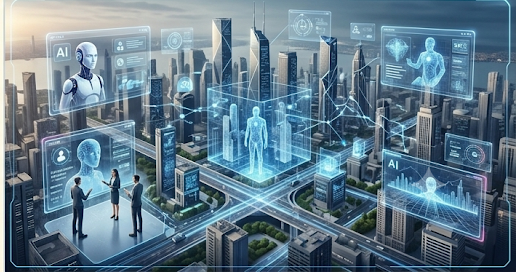
The concept of a Digital Twin was initially used only for factories or engines. In 2030, however, every individual will have their own digital twin.
- Continuously Learning Models: Your digital twin is a personalized AI model that replicates your speaking style, decision-making mechanisms, aesthetic tastes, and even ethical values.
- Attending Meetings on Your Behalf: While you are sleeping or on vacation, your digital twin will be able to attend routine, low-priority meetings at your company and respond to your e-mails exactly in your tone.
While it may sound intimidating at first, this technology will become an inevitable tool for humans to free up intellectual capacity and focus solely on creative and strategic endeavors.
3. The New Frontiers of Data Security: The “Zero-Trust” Era
For AI to make decisions on our behalf, it needs only one thing: Absolute Data. Everything from your bank accounts to your medical history, your daily mood to your biometric data must be open to the system. This fundamentally redefines the scope of cybersecurity.
In 2030, passwords and two-step verifications will be ancient history. Data security will be built entirely on the “Zero-Trust” philosophy. Instead of keeping data on a centralized server, AIs will process it across blockchain-based, encrypted, and isolated networks. Privacy may well become the most expensive luxury of the future.
4. Cards Are Being Redealt in the Business World
The question “Will AI steal our jobs?” is officially outdated. Yes, some traditional professions will disappear, but a much larger wave of employment will follow. Here are some of the brand-new professions we will see on business cards in 2030:
- AI Ethics Auditor: Experts who monitor whether autonomous agents act in accordance with human interests and legal frameworks.
- Digital Twin Director: Consultants who train, update, and protect the cyber identities of individuals’ or companies’ digital twins.
- Prompt Curator: A new generation of specialists who build and manage massive command libraries to extract the most efficient and optimized output from AI.
Conclusion: Prepare Today to Avoid “Standing Idle” in the Future
As William Gibson famously said:
“The future is already here—it’s just not evenly distributed.”
In 2030, when the internet steps out from behind computer screens and becomes an invisible layer of our lives, the winners will not just be those who “use” technology, but those who take AI along as an elite assistant and co-create alongside it.